
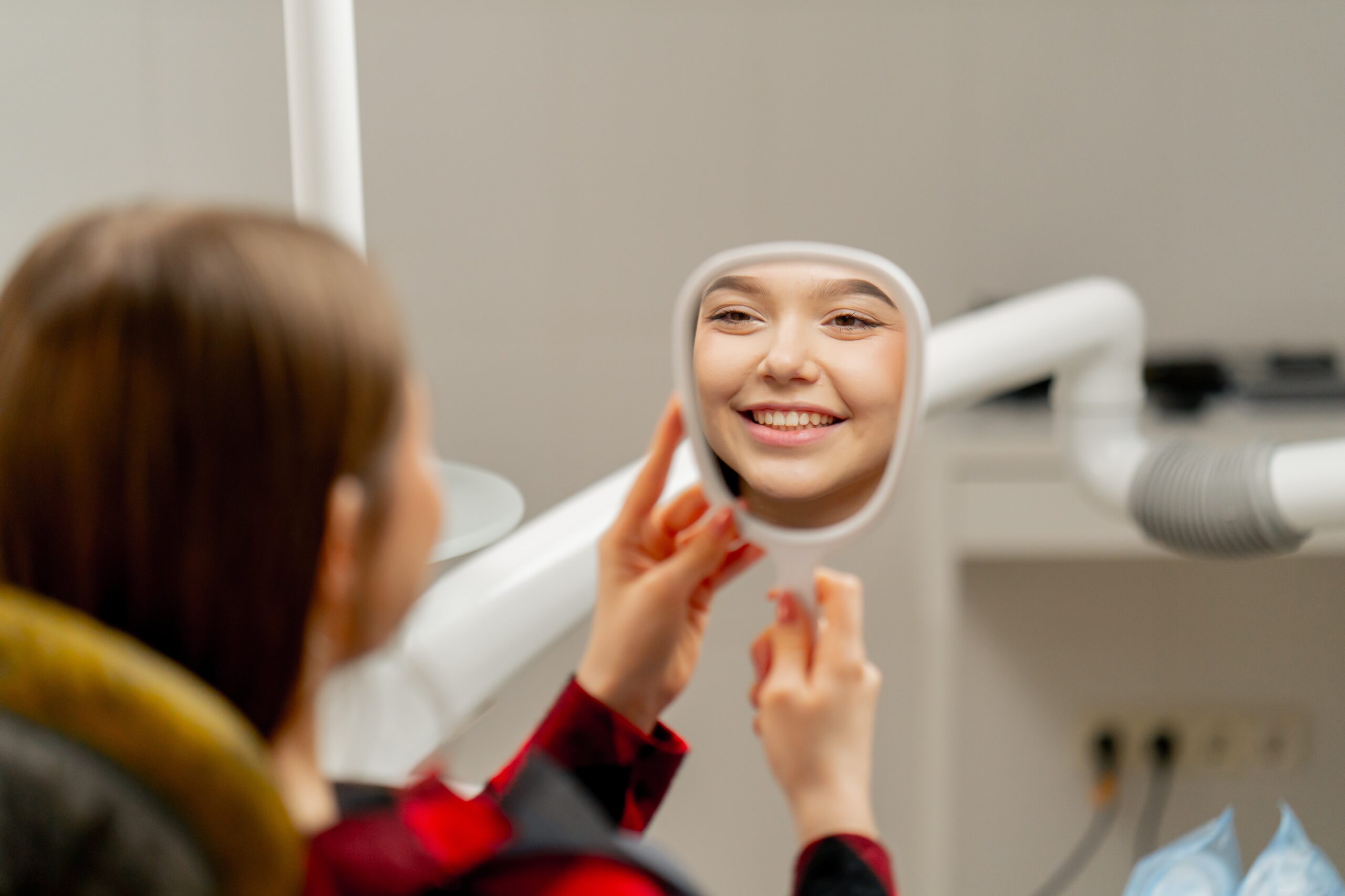
You spent months maybe years in braces or clear aligners. Your teeth looked perfect when the brackets came off. Then, slowly, you noticed it: a slight gap returning, a front tooth twisting back into its old position. If this sounds familiar, you’re not alone. At Crescent Dental & Orthodontics, one of the most trusted dental practices and a go-to dentist in Seguin, we see orthodontic relapse more often than most patients expect and it is one of the most preventable issues in dentistry. In this post, we explain exactly why it happens, what your teeth are doing at the cellular level, and what you can do right now to protect your smile for life.
What Is Orthodontic Relapse?
Orthodontic relapse refers to the tendency of teeth to drift back toward their original position after braces or aligner treatment ends. It can happen gradually over months, or more noticeably over years. In some cases, the shift is minor barely visible. In others, a patient may find themselves almost back to square one, especially if retainer wear was inconsistent. Relapse is not a sign that your orthodontic treatment failed. It is a biological reality one that every orthodontist factors into their treatment plan. Understanding why it happens puts you in the best position to prevent it.
The Biology Behind Why Teeth Move Back
To understand relapse, you need to understand how teeth move in the first place. Your teeth are not rigidly anchored in your jawbone. They sit in sockets surrounded by a network of fibers called the periodontal ligament (PDL). These fibers attach the root of each tooth to the surrounding bone, acting like a suspension system. When orthodontic pressure is applied whether through brackets and wires or clear aligner trays it compresses the PDL fibers on one side of the tooth and stretches them on the other. This triggers a cellular response:
- Osteoclasts (bone-dissolving cells) break down bone on the compressed side, creating space for the tooth to move into.
- Osteoblasts (bone-building cells) deposit new bone on the stretched side, filling in behind the tooth as it moves.
- This cycle continues throughout treatment, gradually repositioning each tooth into its ideal location.
Here is the critical part: when braces come off, the new bone in those sockets is immature and still remodeling. The PDL fibers especially the supporting fibers around the teeth called the transseptal fibers have memory. They were stretched and compressed during treatment, and they want to return to their original configuration. This tension is what pulls teeth back. Research shows that significant bone maturation takes anywhere from 9 to 12 months after treatment ends. This is precisely why the first year after braces is the highest-risk window for relapse and why consistent retainer wear during this period is non-negotiable.
Common Causes of Orthodontic Relapse
1. Inconsistent or Abandoned Retainer Use
This is the number one cause of relapse, by a significant margin. Studies consistently show that patients who stop wearing their retainers within the first two years experience measurable tooth movement. Many patients assume that once their teeth “feel stable,” retainer wear is optional. Unfortunately, teeth never truly stop moving the PDL remains active throughout your life.
2. Wisdom Teeth Eruption
Whether wisdom teeth actually cause crowding remains a debated topic in orthodontics. However, the pressure from erupting third molars particularly in patients whose jaw does not have sufficient space can contribute to front tooth crowding in some cases. Your dentist may recommend monitoring or removing wisdom teeth as part of your retention plan.
3. Natural Age-Related Shifting
Teeth naturally drift forward and inward as we age a process that occurs even in people who never had orthodontic treatment. This phenomenon, called mesial drift, means that maintaining your alignment is an ongoing commitment, not a one-time achievement.
4. Gum Disease and Bone Loss
Periodontal disease weakens the bone and ligament structure that holds teeth in position. Patients with untreated gum disease are at significantly higher risk for tooth movement and orthodontic relapse. This is why maintaining excellent oral hygiene after orthodontic treatment is just as important as wearing your retainer.
5. Parafunctional Habits Grinding and Clenching
Bruxism (teeth grinding) and clenching place excessive, irregular forces on the teeth that can override the stability achieved through orthodontic treatment. If you grind your teeth at night, a nightguard is an essential part of your post-treatment plan separate from your retainer.
Types of Retainers and What the Research Says
Not all retainers are created equal, and the best option depends on your specific case:
Removable Hawley Retainers
The traditional wire-and-acrylic retainer. Durable, adjustable, and long-lasting. Because the wire allows very slight tooth contact, some evidence suggests Hawley retainers may permit minor settling of the bite after treatment which can actually be beneficial in some cases.
Clear Essix Retainers
Virtually invisible and very popular. They hold teeth in a precise position with excellent aesthetic results. The tradeoff: they are more prone to cracking and need replacing every 1-3 years. They also cover the biting surfaces, which some orthodontists believe can prevent ideal settling of the back teeth.
Fixed (Bonded) Lingual Retainers
A thin wire bonded to the back surfaces of the front teeth. Because they are always in place, compliance is not an issue making them highly effective for long-term retention of the lower front teeth, which are the most relapse-prone teeth in the mouth. The downside: they require careful flossing and regular monitoring to ensure the wire remains fully bonded.
How to Prevent Orthodontic Relapse: A Practical Guide
- Wear your retainer exactly as prescribed. For most patients, this means full-time for the first 6-12 months, then nightly for life. “Nightly for life” may sound extreme, but your teeth will always have the potential to shift.
- Replace retainers on schedule. A warped, cracked, or ill-fitting retainer is not doing its job. If your retainer feels tight after not wearing it for a few days, that is a warning sign wear it more consistently, and see your dentist.
- Schedule regular dental check-ups. Your dentist in Seguin can detect early signs of shifting, gum disease, or retainer damage before they become serious problems.
- Address grinding and clenching. Talk to your dentist about a nightguard if you wake up with jaw soreness, headaches, or worn-down teeth.
- Maintain excellent oral hygiene. Healthy gums and bone are the foundation of stable teeth. Brushing twice daily, flossing, and professional cleanings every 6 months are non-negotiable.
What If Relapse Has Already Happened?
If you have noticed your teeth shifting whether it has been months or years since treatment the first step is a consultation with your dentist in Seguin. Depending on the degree of movement, options may range from simply resuming retainer wear (which can re-align minor shifts in some cases) to a shorter round of clear aligner treatment to restore your results. The earlier you address it, the simpler and less costly the solution. Teeth that have been shifting for years require more intervention than those caught at the first signs of movement.
Frequently Asked Questions
How long do I really need to wear my retainer?
Most orthodontists recommend nightly retainer wear indefinitely. Teeth have the potential to shift at any age, and the retainer is the only thing standing between your investment and relapse.
Can teeth shift even with a bonded retainer?
Yes. A fixed retainer only holds the teeth it is attached to. Other teeth including upper teeth and back teeth can still shift if not supported by a removable retainer as well. Additionally, if any bond on a fixed retainer breaks without your knowledge, movement can occur rapidly.
Is it too late to fix my relapse?
It is almost never too late. Adult orthodontics has advanced significantly, and modern clear aligners can address relapse efficiently. Schedule a consultation to understand your options.
Do clear aligners cause more relapse than braces?
The type of orthodontic treatment does not determine relapse risk retainer compliance after treatment does. Patients who wear their retainers consistently after either braces or clear aligner treatment have similar long-term stability outcomes.